
Rajasthan Tourism
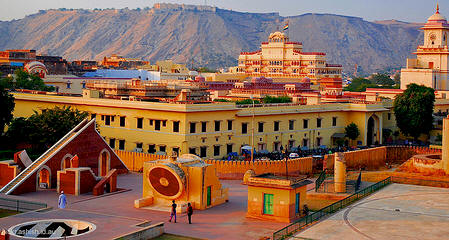
Jaipur
Built by the warrior-astronomer Raja Sawai Jai Singh II in 1727, it is full of
formidable forts, enchanting palaces and lovely temples. Jaipur is listed in
most tourist books as one of the three cities that make India's Golden Triangle
- the other two are Delhi and Agra. The old city of Jaipur is enclosed within
seven gates, the most important of which are Chandpol, Jaipuri and Sanganeri.
Kite Festival : A festival with a difference - as kites take to the sky all over Jaipur. In the evening, kites with lights in them and fireworks brighten the
skies above. If you like kite flying, you should be here.
Elephant Festival : A festival to celebrate Holi, this is a great occasion for
the visitor to watch several elephant sports and also play this festival of
colors.
Gangaur Fair : A festival devoted to Goddess Parvati. It is time for young girls
to dress up in their finery and pray for grooms of their choice while the
married women pray for the well-being of their husbands.
Teej Festival : A festival to mark the advent of monsoon. Essentially a women's
festival, it is interesting to watch them enjoying in groups and at various
bazaars where they turn up to shop in all their finery.
Jaipur Tourist Palace
Nahargarh Fort - Jaipur : Built by Sawai Raja Jai Singh in the year 1734 and located on the asperous
Aravalli hills, the Nahargarh Fort was required to strengthen the protective
coverage of Amber, the capital of the earlier rulers of Jaipur. Further
extension and expansion work was done in the fort by later rulers and it is
these additions that today hold the attention of the tourists. The original old
structures have been hugely affected by the passage of time. The Fort, which is
also known as the Tiger Fort, is reached by a walk past the streets at the base
followed by a 2 km trek up the towering hill. On the top of the hill, the
beautiful Man Sagar Lake spreads a welcoming glance. Right in the middle of the
lake, Raja Jai Singh II built a duck blind, a shelter for screening duck
hunters, for his shooting parties.
Amber Fort - Jaipur : At a distance of around 11 kms from the city of Jaipur, on the Aravalli hills is
located the famous Amber Fort. The construction of the fort was initiated by
Raja Man Singh I, however, additions and modification were made later by Mirza
Raja Jai Singh and Sawai Raja Jai Singh as well. The Rajput rulers operated from
this very fort till the time the capital was shifted to Jaipur. The fort is an
ideal example of Rajput passion for grandeur and their patriotism. For visiting
tourists, the Amber fort holds forth numerous attractions in form of palaces,
temples and gardens. Infact, reaching Amber Fort itself is a wonderful
experience. Sitting on the back of an elephant, tourists feel themselves like a
king or queen of the Rajput clan. It is because of this reason that though
walking up the fort is also an option, yet tourists prefer to take a ride on the
back of an elephant.
Jaigarh Fort - Jaipur :
Situated at a distance of 15 km from the city of Jaipur, the Jaigarh fort is a
classic example of a pure citadel built by the Rajput rulers. The fort, like the
numerous other forts of Rajasthan is not ornamented with carvings. It is infact
very simple and clearly indicates the purpose for which it was built, to bolster
the defense of Amer. The fort is surrounded by moats and has all the features
that are required to dissuade the invading army from marching ahead. The Jaigarh
Fort that literally translates into Victory Fort was constructed by Sawai Raja
Jai Singh between the 15th and the eighteenth century. The fort can be explored
completely within two hours without the help of any guide.
Jal Mahal - Jaipur : Built in 1799, the palace is now abandoned, but reasonably well preserved. In
the monsoons, it looks particularly startling with its red sandstone set against
the water hyacinth filled lake. The Jal Mahal Palace, Jaipur is noted for its
intricate architecture. The Palace was developed as a pleasure spot. It was used
for the royal duck shooting parties. On the road to Amber at a distance of 6.5
kms from Jaipur are the cenotaphs of the royal family. A causeway leads to Jal
Mahal Palace situated in the middle of Man Sagar lake, opposite the
cenotaphs.The first four floors of this building is under water, only the top
floor remains outside.One can have a wonderful view of the lake and the palace
from Nahargarh Fort.
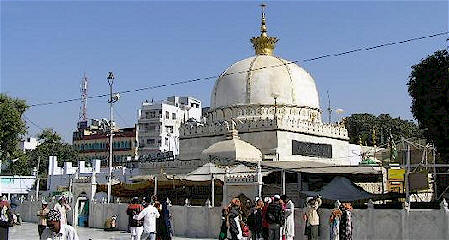
Ajmer
Historically, Ajmer always had great strategic importance and was sacked by
Mahumud of Ghazni on one of his periodic forays from Afghanistan. Later it
became a favorite residence of the great Moghula. One of the first contacts
between the Moghula and the British occurred in Ajmer when Sir Thomas Roe met
with Jahangir here in 1616. The city was subsequently taken by the Scindias and,
in 1818, it was handed over to the British, becoming one of the few places in
Rajasthan controlled directly by British rather than being part of a princely
state.
Ajmer Fair & Festivals
Urs Ajmer Sharif (According to Lunar Calendar)
Held in the memory of the revered Sufi saint Khawaja Moinuddin Chishti, it is an
occasion for thousands of believers to congregate at the shrine and offer their
prayers. All of Ajmer seems to take on a festive air and several programs are
organized to mark the festivals.
Ajmer Tourist Palace
Taragarh
Taragarhor the 'Star Fort' is situated three kilometers and a steep 1 and a half
hour climb beyond the Adhai-Din-Ka-Jhonpra Mosque.
Shah Jahan Mosque
In the corner of the inner court of the Dargah, is a magnificent building in
white marble with a long (30.5m) and narrow.
Pushkar Lake
This lake is situated at the edge of the desert and surrounded by the hills from
three sides.
Nasiya Temple
Situated in the center of the town is a beautiful red Jain temple (Digambar),
known as Nasiyan.
Mayo College
It is a school that was designed to make British gentlemen out of Indian
princes.
Man Mahal
Along the banks of the Pushkar Lake is the former residence of Raja Man Singh of
Amer.
Foy Sagar
Foy Sagar is a picturesque artificial lake named after the engineer for who
created it under.
Dargah Sharif
Situated at the foot of a hill and in the old part of town, this is one of the
most important places in india for muslim pilgrims.
Ana Sagar Lake
Taragarhor the 'Star Fort' is situated three kilometers and a steep 1 and a half
hour climb beyond the Adhai-Din-Ka-Jhonpra Mosque.
Akbar Palace
Back in the city, near the railway station, this fort was built by Akbar in 1570
and today houses.
Adhai Din Ka Jhonpda
Beyond the Dargah, on the outskirts of town, are the ruins of
Adhai-Din-Ka-Jhonpra mosque. According to legend its construction.
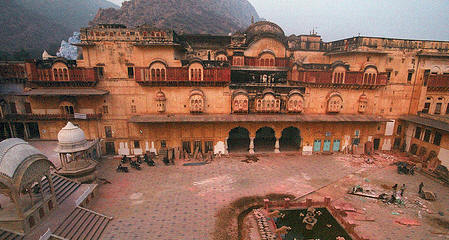
Alwar
It is nested between a cluster of small hills of the Aravali range. Perched on
the most prominent of these hills is a massive ancient fort that whispers tales
of the rich history of the city. This city was formerly known as Mewar The
people of the state did not accept any external interferences and daringly
resisted against foreign invasions. In the 12th and 13th centuries they formed a
group and raided Delhi. But finally Sultan Bulban (1267 A.D. - 1287 A.D.)
suppressed them, bringing the area under the Muslims rule.
Alwar Tourist Palace
City Palace Complex
Below the Fort is the large, imposing City Palace Complex complex, its massive
gates and its tank lined by a beautifully symmetrical chain of ghats ...
Company Garden
A picturesque garden, laid out during the reign of Maharaja Shiv Dan Singh in
1868 A.D. The garden has an enchanting setting called 'Shimla' ..
The Fort
This huge fort , with 5 Km. of its ramparts from north to south and 1.6 Km from
east to west , is perched on the ridge top...
Government Museum
This government museum is on the top floor of the City Palace complex, up a ramp
from the main courtyard.
Jai Samand Lake
6-km from the city, Jaisamand Lake makes a beautiful artificial lake constructed
by Maharaja Jai Singh in 1910 AD.
Sagar
Behind the City Palace is an artificial lake built in 1815 A.D. by Maharaja
Vinay Singh with few temples along its banks.
Siliserh Lake
Located 13 kms from the city of Alwar, the enchanting Siliserh Lake was built in
1845 AD by Maharaja Vinay Singh for his Queen Shila .
Vijay Mandir Palace
Situated 10-km away from the city this palace is a splendid palace, built by
Maharaja Jai Singh in 1918 AD. A picturesque lake overlooking the palace
Banswara
Banswara, it is likely, derived its name from bans or bamboo shoots, which once
grew in abundance around the places. It was a part of the territory known aas
Bagar during the regin of Udai Singh (who succeeded to the throne sometime
between 1496 and 1498 AD) and is said to have been founded by Jagmal, the
younger son of Udai Singh who, being much devoted to his queen, the mother of
Jagmal and wanting to see him installed as a ruler of a separate State, had
partitioned Bagar between the two claimant sons before his death. Banswara
remained the capital of erstwhile State of the same name for about four
centuries thereafter.
The crumbling stone wall enclosing the old town is still visible, overlooked by
the palace of the former rulers of the principality. Bai Tal - an artificial
tank - believed to have been constructed by Lachhi Bai of Idar, the Rani of
Maharawal Jagmal, lies on the eastern side of the town. About a kilometre away,
are the chhatris or cenotaphs of the royality. The town has some Jain and Hindu
temples and old mosques.
Banswara Tourist Palace
Shri Raj Mandir
This 16th century old city palace of Banswar overlooks the town. It covers a
large area, and is a typical example of old Rajput architecture. The palace is
still owned by the Royal family and can be visited only on invitation.
Kagdi Picup and Mahi Dam
A part of Mahi Bajaj Sagar Project, beautiful fountain gardens overlook the
Kagdi Lake.
Anand Sagar Lake
On the eastern side of the town is an artificial lake also known as Bai Talab,
which is said to have been constructed by Lachhi Bai of Idar, the Rani of
maharawal Jagmal. Nearby lies the chattris or cenotaphs of the rulers of the
state. Couple of holy tree known as "Kalp Vriksha" which is said to fulfill the
desires of the visitors is also present nearby. The charming surroundings also
attract many visitors overhere.
Dialab Lake
Part of this lake remains covered with beautiful lotus flowers. Badal Mahal, the
summer residence of former rulers is located on the embankment of the lake.
Abdulla Pir
A shrine of Bohra Muslims saint, a large numbers of Bohra Muslims visit this
place during Urs from different parts of the world every year.
Bharatpur
Bharatpur was the premier Jat State in Rajasthan. Badan Singh established and
founded the fort and palaces of Deeg in 1725. Seven years later, his son laid
the foundation nearby of the fort of Bharatpur. It was a formidable structure
called Logagarh (iron fort), which lived up to its reputation.
Bharatpur Tourist Palace
Lohagarh Fort
Lohagarh, built by Maharaja Suraj Mahal, is located in the heart of the old
city. Its entrance is from a crowded street that
Bharatpur Museum
The government Museum is housed in the former durbar hall, the maharaja's
meeting hall, in the fort.
Bharatpur Palace
The splendid Bharatpur Palace has a rich repository of a large number of ancient
exhibit that date back to the early
Keoladeo National Park
Amongst India's premier wildlife sanctuaries is the Keoladeo Ghana National
Park, Bharatpur, situated at the border between the states of Rajasthan and
Uttar Pradesh
Bikaner
Binaker's history dates back to 1488 A.D. when a Rathore Prince, Rao Bikaji- a
desendent of the founder of Jodhpur(1459 A.D.), Rao Jodhaji, established his
kingdom here. Rao Jodhaji had five sons but Rao Bikaji was the most enterprising
of them. Bikaji chose a barren wilderness called ‘Jangladesh' and trandormerd it
to an impressive city, called Bikaner after the founder' name.
Camel Festival
An enchanting desert city which comes alive with music and dance. It is fast
gaining popularity as the visitor finds an opportunity to see some unusual folk
performances, camel, race camel dance etc. here.
Bundi
In 1193 A.D. when Prithviraj Chauhan was defeated by Sultan Mohammed Ghauri,
some Chauhan nobles seeked shelter in Mewar and became allies to the Rana while
other young warriors move towards the Chambal valley and overpowered the Meena
and Bhil tribals-thus establishing their own kingdom of Hadoti. Later, two
branches of Hadas formed two separates states of Kota and Bundi, on either side
of the river Chambal. Bundi is surrounded by the Aravalli hills on the three
sides and is circumscribed by a massive wall with four gateways.
Bundi Tourist Palace
Junagarh Fort
Junagarh Fort was constructed between 1588 and 1593 by Raja Rai Singh, a general
in the army of Mughal emperor Akbar, with embellishments .
Lalgarh Palace
Situated 3km north of the city center this palace which built by Maharaja Ganga
Singh in the memory of his father, Maharaja Lal Singh.
Camel Research farm
This government managed station, 8km from Bikaner is probably unique in Asia.
There are about 230 camels at the National Camel Research
Devi Kund
Eight Kilometers east of Bikaner, this is the site of royal chatries of many of
the Bika dynasty rulers. The white marble chatri .
Gajner Wildlife Sanctuary
The lake and forested hills of this reserve, 32 km from Bikaner on the Jaisalmer
road, are inhabited by wildfowl.
Shiv Bari Temple
Enroot to Camel Breeding Farm is the Laleshwar Mahadev Temple (Shiv Bari).
Fortified by a high wall, the temple.
Deshnok Temple
Deshnok is a village 30km south of Bikaner along the Jodhpur road. A visit to
Deshnok's fascinating temple of Karni Mata.
Kolayat Ji
This Temple is fifty two kilometers towards Jaisalmer and is dedicated to "Kapil
Muni" who is fifth recreation of "Lord Vishnu".
Kalibangan
The name Kalibanga itself does not say much but to a student of history it is
immediately recognized as one of the important.
Bhandasar Temple
Bhandasar Temple is dedicated to the fifth tirthankar Sumitnath, and the
building was commissioned in 1468 by a wealthy Jain merchant.
Chittaurgarh
Alauddin Khilji was the first to sack Chittaur in 1303 A.D. overpowered by a
passionate desire to possess the regal beauty, queen Padmini. Legend has it,
that he saw her face in the reflection of a mirror and was struck by her
mesmerising beauty. But the noble queen preferred death to dishonour and
committed ‘Jauhar'.
In 1533 A.D., during the rule of Bikramjeet, came the second attack from Bahadur
Shah, the Sultan of Gujarat. Once again Jauhar was led by Rani Karanavati, a
Bundi princess. Her infant son, Udai Singh was smuggled out of Chittaur to Bundi
who survived to inherit the throne of the citadel. He learnt from his traumatic
childhood that discretion is preferred to valour. So in, 1567 A.D. when the
Mughal Emperor invaded Chittaur, Udai Singh fled to establish a new Capital,
Udaipur-a beautiful lake city, leaving behind Chittaur to be defended by two 16
year old heroes, Jaimal of Bednore and Patta of Kelwa. These young men displayed
true Rajput chivalry and died after ‘Jauhar' was performed. Immediately
thereafter Akbar razed the fort to a rubble. Chittaur was never inhabited again
but it always asserted the heroic spirit of Rajput warriors.
Chittaurgarh Tourist Palace
The Fort
Set on a high plateau, the fort sprawls supremely over the countryside. It was
here that the Sisodias went to war against the Mughals at the famous
Vijay Satambh
The tower was erected between 1458 and 1468 and 37m in nine storeys. It is
possible to climb to the top of the tower through the narrow 157
Kirti Stambh
The 22m high 12th century tower was built by a Jain merchant and was dedicate to
Adinath, the first Jain Tirthankar(one of the 24 great Jain teachers),
Rana Kumbha's Palace
After entering the fort, on the right hand side is the massive 15th century Rana
Khumbha's Palace. It contains both elephant and horse stables
Meerabai Temple
This temple was built during the reign of Maharana Kumbha and later given to
Mira Bai when she needed a place to worship Lord Krishna, ...
Padmini's Palace
Padmini's palace, built beside the lotus pool with its pavilion in which Padmini
sat reflected in Ala-ud-din's mirror.
Kumbha Shyam Temple
Situated on the on the eastern side of Chittaurgarh, the Kumbha Shyam Temple is
dedicated to Sarah, the Boar incarnation of Vishnu.
Kalika Mata Temple
Across form Padmini place is the Kalika Mata Temple, an 8th-century temple
originally dedicated to Surya or the Sun God but later converted
Govt. Museum
The magnificent Fateh Prakash Mahal, presently a fine Museum with an exquisite
example of sculptures from temples and buildings in the fort
Jaimal & Patta Palaces
The Jaimal and Patta Palaces stand on a rocky rise south of Gomukh Kund. Both
warrior heroes died in the third sack of Chittaurh fighting
Nagari
Seven Kilometers from Bassi, on the Chittaurgarh road, is Nagari, one of the
oldest towns in Rajasthan.
Dungarpur
Dungarpur district is the stronghold of the Bheels, a tribe whose history of
occupancy in the Aravalli range is said to date back to 4000 BC.Founded in 1197.
The rulers of Dungarpur claim descent from the Rajput house of Mewar. The first
rulers of Dungarpur were Kunwar Mahap and his descendants who resided in the
town of Galiankot, where their ruined castle still stands. Towards the end of
the 12th century, Samant Singh, the eldest son of the ruler of Mewar, had to
leave Mewar in favor of his younger brother Kumar Singh. Samant Singh drifted
into the hilly area of Bagar and, within the next century, Samant Singh's
successors controlled the whole province of Bagar. Rawal Udai Singh of Bagar was
killed at the battle of Khanua in 1527, fighting for Mewar against Moghul
Emperor Babur. His territory was thereafter divided between his two sons,
forming two separate states. Prithvi Raj remained in Dungarpur while his brother
Jagmal Singh became independent ruler of Banswara.
Dungarpur Tourist Palace
Juna Mahal
The seven storey palace, Juna Mahal was built in stages between 13th and 18th
centuries. It is filled with many old frescoes
Rajmata Devendra Kunwar State Museum
The Government run museum has pieces from 6th century. They are well displayed
but the captions are in Hindi.
Deo Somnath Temple
The beautiful Deo Somnath Temple about 25 km north of town, dates back to the
12th century. An amazing banyan tree which
Galiakot
About 50 km south east of Dungarpur is the important Muslim Pilgrimage center of
Galiakot. This town is famous for the
Baneshwar
Baneshwar is the confluence of three holy rivers: the Mahi, Som and Jakham. In
January - February the week long Baneshwar Fair
Jodhpur
Set at the edge of the Thar desert, the imperial city of Jodhpur echoes with
tales of antiquity in the emptiness of the desert. Once the capital of the
Marwar state, it was founded in 1459 A.D. by Rao Jodha-chief of the Rathore clan
of Rajputs who claimed to be descendants of Rama - the epic hero of the
Ramayana. The massive 15th century A.D. Mehrangarh Fort looms on the top of a
rocky hill, soaring 125 Mts. Above the plains. The city is encompassed by a high
wall -10 km long with 8 gates and innumerable bastions. A major trade centre of
the 16th century A.D. the fortress-city of Jodhpur is now the second largest
city of Rajasthan.
Jodhpur Tourist Palace
Mehrangarh Fort
Mehrangarh Fort was founded in 15th century by the Rathore Rajputs when they
shifted their capital from nearby Mandore
Jaswant Thada
The Jaswant Thada, located half way up the interminably long road that climbs
onwards to the fort, is the traditional cremation
Umaid Bhawan Palace
Constructed of marble and pink sandstone this immense palace is also known as
the Chhittar Palace because it uses local
Girdikot & Sardar Market
Tiny shops line both sides of the narrow lanes in these markets. One can find
textiles, silver, handicrafts, aromatic spices, vegetables
Museum
The museum has fine collection of sculptures, weapons and stuffed animals,
including almost featherless desert birds in two glass cases.
Balsamand Lakes & Gardens
A pretty lake with a pleasure or summer palace, the Balsamand palace, on its
banks. These are built around the artificial lake
Mandore
Mandore, 9 km to the north of Jodhpur, was the capital of Marwar before the
foundation of Jodhpur. It was founded in the 6th century
Mahamandir Temple
Laterally , the great temple, is a place where sacred glory reigns in a peaceful
tranquility. Situated on Mandore road,
Kailana Lake
Situated 11 km form Jodhpur, this serene lake is and ideal jaunt for picnics.
Osian
An oasis in the desert, situated on the diversion off the main Jodhpur - Bikaner
Highway. A drive to this ancient township
Luni Fort
Fort Chanwa of Luni is an exceptional example of Elegance and Symmetry in Indian
architecture of the last century. The entire fortress
The Dhawa
This sanctuary is about 40km southwest of Jodhpur, on the road to Barmer , and
has populations of Black bucks
Jaisalmer
The city has an interesting legend associated with it, according to which, Lord
Krishna-the head of the Yadav Clan, foretold Arjuna that a remote descendent of
the Yadav Clan would built his kingdom atop the Trikuta Hill. His prophecy was
fulfilled in 1156 A.D. when Rawal Jaisal, a descendent of the Yadav Clan and a
Bhatti Rajput, abandoned his fort at Lodurva and founded a new capital -
Jaisalmer, perched on the Trikuta Hill.
Desert Fair
Jaisalmer exercises immense charm, but with the staging of the annual Desert
Festival (January - February), it has also become one of the annual calendar.
Essentially, it is a showcase of the region on the desert citadel. A number of
amusing events at the stadium include turban tying competitions and camel races.
Jaisalmer Tourist Palace
Jhalawar Fort (Garh Palace)
The impressive fort in the centre of the town presently houses the collectorate
and other district office. Some exquisite paintings and mirrors on the walls of
‘ zanana khas' are of particular interest. Permission to see these painting can
be obtained from the offices located here.
Government Museum
One of the oldest museums of Rajasthan established in 1915 A.D., it has a fine
collection of paintings, rare manuscripts, idols and beautiful statues of
Lakshminarayan.Vishnu, Krishna, Ardhanarishvar, Natraj and Trimurti.
Bhawani Natya Shala
Close to the fort is the most unusual theatre in India. It was constructed in
1921 A.D. where Parsi theatre was performed initially The building has been
recently revived and offers an excellent insight into the theatre art.
Gagron Fort
The impressive fort, built over several centuries ( 8th to 14th centuries A.D.)
stands witness to many great battles and is surrounded by the tranquil waters of
the ahu and kali sindh rivers on the three sides. A beautiful mausoleum of a
sufi saint Mitheshah just outside the fort is the venue for an annual colorful
fair held during the month of Muharram.
Buddhist Caves and Stupas
The ancient Buddhist caves located in the village Kolvi. A colossal figure of
buddha and the carved stupas are the most impressive structures in the caves.
Rain Basera (6KM)
A picturesque wooden cottage on the banks of the Kishan Sagar pond, it is as
idyllic haunt for picnickers. The cottage was originally built elsewhere and
later transported to the present location .Amazingly, it still retains much the
original design.
Jhalarapatan (6KM)
The small town is popularly referred to as the ‘city of bells' an entire
township resides within the confines of a wall, that was built to protect the
trade caravans as patan was the junction of caravan routes. A magnificent 10th
century Surya Temple (Padam Nath Temple ) is the major attraction of the city.
The temple has some splendid sculptures as well as, well preserved idols of
Surya.
Chandrabhaga Temples(7KM)
On the banks of the magnificent Chandrabhaga river stand some splendid 7th
century A.D. temples the intricately carved pillars and arched gateways are fine
examples of the temple architecture and craftsmanship. The 11th century A.D.
Shantinath jain temple is also noteworthy with fine murals and exquisite
sculptures.
Buddhist Caves and stupas
The ancient Buddhist caves located in the village Kolvi. A colossal figure of
buddha and the carved stupas are the most impressive structures in the caves.
Dag (100Km)
Renowned for some 12th century ad temples of Dageshware Mata, Rani ka maqbara
and kama Varneshwar Mahadeo, Dag is a fascinating experience in the rustic
ambience.
Kakuni (65Km)
Kakuni lies in baran District. Some ancient temples dot the ruins of this old
township. A life- size idol of Lord Ganesha and a Shiva Lingam dating back to
the 8th century A.D. are the impressive structures. Ruins of the Bhimgarh Fort,
built by Raja Bhim Deo, lie on the other side of the Parvan River and are worth
a visit.
Bhimsagar (24 km)
The dam built on the Uajad river is near the erstwhile capital of Khichi Chauhan
rulers. Bhimsagar allows a glimpse of the Rajput and Mughal architecture in the
ruins of palaces , temples and mosques.
Atishey Jain Temple, Chandkheri (35 km)
This 17th century temple is a notable example of temple architecture. It also
has religious value having Adinath statue, 6 feet tall, in a sitting position.
Accommodation and meals are available at reasonable prices in the temple area.
Dalhanpur (54)
The ancient ruins of impressive temples extend over an area of 2 km. Marvelously
carved pillars, torans and exquisite sculptures make these temples interesting.
Dolhanpur lies on the bank of River Chhappi, where an irrigation dam is being
constructed. Dense forests with lush foliage add to the natural beauty of the
spot.
Fort of Gangadhar (120 km)
An impressive edifice with the oldest rock inscription and some marvelously
built temples.
Jhalawar
The princely state of the Jhalas, Jhalawar was created in 1838 A.D., after being
separated from Kota by the British. Remarkable contributions from various rulers
including Zalim Singh I made it a culturally rich state. Lying in the
south-eastern region of Rajasthan at the edge of the Malwa plateau, Jhalawar has
rocky but water-laden verdant landscape, unlike much of Rajasthan. With some
exquisite pre-historic cave paintings, massive forts, thickly wooded forests and
exotic wildlife variety. Jhalawar boasts of rich historic as well as natural
wealth. One can spot countless species of birds as one drives past the lush
countryside. Red poppy fields and orange laden orchards make the countryside all
the more fascinating and colourful during winters. The area around Bhawani Mandi
is known for contributing a major share to the production of citrus in the
country.
Kartik Fair / Chandrabhaga Fair
(every year in Oct - Nov) A big cattle fair is held every year in the month of
Kartik (Oct - Nov) at Chandrabhaga near Jhalarpatan. On the full moon night of
Kartik Purnima, devotees gather to take a holy dip in the river.
Jhalawar Tourist Palace
Jhalawar Fort (Garh Palace)
The impressive fort in the centre of the town presently houses the collectorate
and other district office. Some exquisite paintings and mirrors on the walls of
‘ zanana khas' are of particular interest. Permission to see these painting can
be obtained from the offices located here.
Government Museum
One of the oldest museums of Rajasthan established in 1915 A.D., it has a fine
collection of paintings, rare manuscripts, idols and beautiful statues of
Lakshminarayan.Vishnu, Krishna, Ardhanarishvar, Natraj and Trimurti.
Bhawani Natya Shala
Close to the fort is the most unusual theatre in India. It was constructed in
1921 A.D. where Parsi theatre was performed initially The building has been
recently revived and offers an excellent insight into the theatre art.
Gagron Fort
The impressive fort, built over several centuries ( 8th to 14th centuries A.D.)
stands witness to many great battles and is surrounded by the tranquil waters of
the ahu and kali sindh rivers on the three sides. A beautiful mausoleum of a
sufi saint Mitheshah just outside the fort is the venue for an annual colorful
fair held during the month of Muharram.
Buddhist Caves and Stupas
The ancient Buddhist caves located in the village Kolvi. A colossal figure of
buddha and the carved stupas are the most impressive structures in the caves.
Rain Basera (6KM)
A picturesque wooden cottage on the banks of the Kishan Sagar pond, it is as
idyllic haunt for picnickers. The cottage was originally built elsewhere and
later transported to the present location .Amazingly, it still retains much the
original design.
Jhalarapatan (6KM)
The small town is popularly referred to as the ‘city of bells' an entire
township resides within the confines of a wall, that was built to protect the
trade caravans as patan was the junction of caravan routes. A magnificent 10th
century Surya Temple (Padam Nath Temple ) is the major attraction of the city.
The temple has some splendid sculptures as well as, well preserved idols of
Surya.
Chandrabhaga Temples(7KM)
On the banks of the magnificent Chandrabhaga river stand some splendid 7th
century A.D. temples the intricately carved pillars and arched gateways are fine
examples of the temple architecture and craftsmanship. The 11th century A.D.
Shantinath jain temple is also noteworthy with fine murals and exquisite
sculptures.
Buddhist Caves and stupas
The ancient Buddhist caves located in the village Kolvi. A colossal figure of
buddha and the carved stupas are the most impressive structures in the caves.
Dag (100Km)
Renowned for some 12th century ad temples of Dageshware Mata, Rani ka maqbara
and kama Varneshwar Mahadeo, Dag is a fascinating experience in the rustic
ambience.
Kakuni (65Km)
Kakuni lies in baran District. Some ancient temples dot the ruins of this old
township. A life- size idol of Lord Ganesha and a Shiva Lingam dating back to
the 8th century A.D. are the impressive structures. Ruins of the Bhimgarh Fort,
built by Raja Bhim Deo, lie on the other side of the Parvan River and are worth
a visit.
Bhimsagar (24 km)
The dam built on the Uajad river is near the erstwhile capital of Khichi Chauhan
rulers. Bhimsagar allows a glimpse of the Rajput and Mughal architecture in the
ruins of palaces , temples and mosques.
Atishey Jain Temple, Chandkheri (35 km)
This 17th century temple is a notable example of temple architecture. It also
has religious value having Adinath statue, 6 feet tall, in a sitting position.
Accommodation and meals are available at reasonable prices in the temple area.
Dalhanpur (54)
The ancient ruins of impressive temples extend over an area of 2 km. Marvelously
carved pillars, torans and exquisite sculptures make these temples interesting.
Dolhanpur lies on the bank of River Chhappi, where an irrigation dam is being
constructed. Dense forests with lush foliage add to the natural beauty of the
spot.
Kota
The history of the city dates back to the 12th century A.D. when the Hada
Chieftain, Rao Deva, conquered the territory and founded Bundi and Hadoti.
Later, in the early 17th century AD during the reign of the Mughal Emperor
Jahangir, the ruler of Bundi -Rao Ratan Singh, gave the smaller principality of
Kota to his son, Madho Singh. Since then Kota became a hallmark of the Rajput
gallantry and culture.
The history of Kota is linked with the history of Bundi. Both Bundi and Kota
came under the rule of the Chauhans in the 12th century. The descendents of the
Chauhans set up their capital at Bundi and ruled from here. While Bundi was the
capital, Kota formed the land granted to the eldest son of the ruler. This
arrangement continued until 1624. In 1624, Emperor Jahangir, the great Mughal
ruler, partitioned Bundi and made Kota an independent state. Rao Madho Singh,
son of the ruler of Bundi, ascended the throne of Kota. It became a part of the
British Empire in 1818 and later became a part of the Indian state of Rajasthan,
when it gained independence in 1947.
Dussehra Mela (Sep - Oct of every year)
Dussehra, an important festival of the Hindus commemorating the victory of good
over evil, is celebrated in Kota like other parts of India with great fervor.
The specialty of Dussehra in Kota is the Dussehra Mela celebrated in the month
of October.
Kota Tourist Palace
Maharao Madho Singh Museum
Situated in the old palace, the museum has a superb collection of Rajput
miniature paintings of the Kota school, exquisite sculptures
Kota Barrage
A part of the irrigation canal system on the Chambal River, this beautiful
setting is ideal for outings and evening strolls. Other Places
Jag Mandir
Between the City palace and the RTDC Hotel Chambal is the picturesque artificial
tank of Kishore sagar. Right in the middle
Chambal Garden
The Chambal Gardens are on the banks of the Chambal River, south of the fort.
They are popular place for picnic. The centerpiece is a murky pond
Rana Pratap Sagar Dam
Rana Pratap Sagar dam is the second in the series of Chambal Valley Projects,
located 52 km downstream of Gandhi Sagar.
Govt. Museum
Housed in the Brijvilas Palace near the Kishore Sagar, the museum displays a
rich collection of rare coins, manuscripts and a representative selection
Haveli Of Devataji
The beautiful Haveli of Devta Shridharji is located in the middle of the busy
market. The Haveli is noted for its splendid frescoes
Other Places
Kansua temple with a four faced Shiva Lingam, Bhitria Kund, Adhar Shila Budh
Singh Bafna Haveli and Yatayat Park
Bhanddeora Temple
Built in 11 - 12th century this temple is also known as the Khajuraho of
Rajasthan'. It is 110 km from Kota and can
Remains Of Garhgachh
The 9th and 13th century AD temples in red stone, situated in the Baran district
near Atru (30 km)
Nahargarh Fort
Situated 145km from Kota, Nahargarh fort is an impressive structure in red stone
and a fine example of the Mughal architecture
Sitabari
A picturesque picnic spot, situated near the village of Kelwara in the Baran
district on the way to Kota -Shiv Purl. The old temples of Sita
Shergarh
Shergarh has a historic fort near Barora 10 km in Atru Tehsil in the Baran
district. While exploring this wonderful city, one can
Fort Of Shahbad & Mosque
The fort was constructed in 1577 AD by the Chauhan ruler Muktaman. The mosque is
the biggest in Rajasthan and
Darrah Wildlife Sanctuary
The 250 Sq.Km. Darrah wildlife sanctuary is located about 50 Km. from Kota. Here
there are spotted deers, Wild boars
Rock Paintings of Alaniya
25 km from Kota, the beautiful rock paintings of primeval man on the bank of
Alaniya are worth watching.
Baroli
Baroli is situated 45 km southwest of Kota on the way to Rana Pratap Sagar. Set
is a peaceful area, many of these 9th century temples
Kumbhalgarh
In Rana Kumbha's time the kingdom of Mewar spread from Ranthambore to Gwalior,
including vast tracts of present-day Rajasthan and Madhya Pradesh. Mewar's
rulers became patrons of all that was best in Indian martial and fine arts,
architecture, and learning. Of the 84 fortresses defending Mewar, 32 were
designed and built by Rana Kumbha. Of these, Kumbhalgarh with its 36-kilometer
long wall and soaring towers is the most impressive. Kumbhalgarh stands on the
site of an ancient citadel dating back to the second century AD belonging to a
Jain descendant of India's Mauryan emperors. It defined the boundaries between
Mewar and Marwar and became a refuge for Mewar's rulers in times of strife. Its
steel gray ramparts encircle the fertile Shero Mallah Valley, with ancient
monuments cenotaphs, ponds and flourishing farms. Kumbhalgarh fell only once in
its history, to the combined forces of Emperor Akbar, Raja Man Singh of Amber,
and Raja Udai Singh of Amber, and Raja Udai Singh of Marwar.
Kumbhalgarh Wildlife Sanctuary
This jungle adjoins the historical Kumbhalgarh Fort and used to shield the fort
from invaders. Now it protects the rare species of animals, struggling for their n of Udai Singh and the massive
Muchchal Mahavir
The Muchhal Mahavir temple is situated about five km from Ghanerao in the
Kumbhalgarh Sanctuary. Its distinctive feature is the
Kumbhalgarh Wildlife Sanctuary
Kumbhalgarh is just 90 kms. from Jodhpur on the Udaipur - Pali - Jodhpur road.
This jungle adjoins the
Mount Abu
The history of Mount Abu is as diverse as the city itself. It was once a part of
the Chauhan kingdom of Rajasthan and served as a summer resort for the Rajput
kings of the region. After that, it was leased by the British government from
the then Maharaja of Sirohi for use as the headquarter of the resident to
Rajputana (another name for Rajasthan).
During the British rule in India, it was the favorite summer destination of the
British, who came here to escape the dusty, dry heat of the plains particularly
Rajasthan. It also served as a sanatorium for the troops. The small huts and
cottages here tell stories of those times even today.
Summer Festival
Organized in the only hill station of Rajasthan, this is the coldest place at
this time of the year. Folk dances and a general atmosphere of gaiety prevails
in this tiny hill resort and the tourist has ample time to relax and enjoy
himself.
Mount Abu Tourist Palace
Gaumukh Temple
Down on the Abu Road side of Mount Abu, a small stream flows from the mouth of a
marble cow, giving the shrine its name
Delwara Jain Temple
The Temple complex includes two temples with exquisite marble carvings. The
older of the temples is the Vimal Vasahi, built in 1031 by a Gujrati
Adhar Devi Temple
The Adhar Devi temple, about 3km north of town, is chiseled out of a huge rock
reached by a flight of 365 steps. You have to stoop to get
Museum & Art Gallery
The museum is divided into two sections. The first section has been adorned by a
diorama of local tribal hut with their usual living style
Viewpoints
Of the various points around the town, Sunset Point, 1.5 km from the tourist
office of Mount Abu, is the most popular.
Shri Raghunathji Temple
Situated near the ‘Nakki' lake is the temple dedicated to Shri Raghunathji with
a beautiful image of the deity that was placed here in 14th century
Gardens & Parks
Beautifully laid parks and gardens are interspersed throughout the hilly
paradise. Ashok Vatika,Gandhi park, Municipal Park, Shaitan Singh
Trevor's Tank
Named after the British engineer who constructed it, Trevor's Tank is a delight
for bird watchers with densely wooded hills that
Guru Shikhar
At the end of the plateau, 15km from Mount Abu, is Guru Shikar, the highest
point in Rajasthan at 1722m. A road goes almost all the ...
Achalgarh
The Shiva Temple of Achaleshwar Mahandeva, in Achalgarh, boasts a number of
interesting features , including what is said to be a toe of Shiva
Mount Abu Tourist Palace
Gaumukh Temple
Down on the Abu Road side of Mount Abu, a small stream flows from the mouth of a
marble cow, giving the shrine its name
Delwara Jain Temple
The Temple complex includes two temples with exquisite marble carvings. The
older of the temples is the Vimal Vasahi, built in 1031 by a Gujrati
Adhar Devi Temple
The Adhar Devi temple, about 3km north of town, is chiseled out of a huge rock
reached by a flight of 365 steps. You have to stoop to get
Museum & Art Gallery
The museum is divided into two sections. The first section has been adorned by a
diorama of local tribal hut with their usual living style
Viewpoints
Of the various points around the town, Sunset Point, 1.5 km from the tourist
office of Mount Abu, is the most popular.
Shri Raghunathji Temple
Situated near the ‘Nakki' lake is the temple dedicated to Shri Raghunathji with
a beautiful image of the deity that was placed here in 14th century
Gardens & Parks
Beautifully laid parks and gardens are interspersed throughout the hilly
paradise. Ashok Vatika,Gandhi park, Municipal Park, Shaitan Singh
Trevor's Tank
Named after the British engineer who constructed it, Trevor's Tank is a delight
for bird watchers with densely wooded hills that
Guru Shikhar
At the end of the plateau, 15km from Mount Abu, is Guru Shikar, the highest
point in Rajasthan at 1722m. A road goes almost all the
Achalgarh
The Shiva Temple of Achaleshwar Mahandeva, in Achalgarh, boasts a number of
interesting features , including what is said to be a toe of Shiva
Nathdwara
At about 90 min. drive (about 48 kms) from Udaipur in Rajasthan lies a very
popular dham, Nathdwara set amidst idyllic hills on the left bank of the Banas
river, where one can see devotees in large numbers flocking for worship. The
place is most popular for its sacred Vaishnava temple of Lord Srinathji, the
manifestation of Lord Krishna.Sri Nathdwara or the gateway leading to the
Srinathji is also the centre of the Pushtimarg Sampradaya, a doctrine created by
Jagat guru Sri Vallabhacharya. One can find the idol of Srinathji, sculpted out
of one piece of black marble belonging to the 12th century and was first
installed by Sri Vallabhacharya in a small temple at Jatipura, near Mathura. The
little town is a honeycomb of lanes and alleys leading to the hub of activity,
the Srinathji temple. The Haveli of Srinathji(as the temple is called), was once
a royal palace of the Rajput rulers. Over 1000 devotees reach the temple early
in the morning to serve the Lord, each day of the year. Getting up during the
early hours for the first darshan is a regular observation where Lord Sir Nathji
resides in regal splendour. Darshans or glimpses of Srinathji can be sought 8
times in the day. Collectively known as Ashtaya, the 8 darshans are Mangala,
Shrungar, Gwal, Rajbhog, Uthhapan, Bhog, Sandhaya Aarti and Shayan. In each of
them the leelas (divine manifestations) of the Lord are described and harmonized
with His daily routine. Groups of devotees constantly flush into the temple,
pushing, pulling and reaching out, sometimes even getting hurt in the process.
The darshan is like a matter of life and death for them, and they endure it
bravely eight times in a day just for those few seconds.
The Srinathji Temple
Srinathji represents the form of Krishna, in which he lifted the Govardhana hill
and subdued Indra the king of Devas who was sending an incessant downpour of
rain, causing immense hardship to the cow herds of Gokul. The image of Srinathji
is believed to have been a self manifested one.
Nathdwara Tourist Palace
Srinathji Temple
Situated 48 km north of Udaipur, Nathdwara has the famous Sri Nathji Temple
which is an important shrine for Vashnavites ...
Rajasamand Lake
Rajsamand Lake was created by a dam constructed in 1660 by Maharana Jai Singh.
There many ornamental arches and beautifully carved
Nav Chowki
On the banks of the lake is this pillared edifice which is paved with marble and
has beautifully carved arches and chhatris.
Pushkar
Historically, Pushkar always had great strategic importance and was sacked by
Mahumud of Ghazni on one of his periodic forays from Afghanistan. Later it
became a favorite residence of the great Moghula. One of the first contacts
between the Moghula and the British occurred in Pushkar when Sir Thomas Roe met
with Jahangir here in 1616. The city was subsequently taken by the Scindias and,
in 1818, it was handed over to the British, becoming one of the few places in
Rajasthan controlled directly by British rather than being part of a princely
state.
Pushkar Fair
The well-known and marked with largest participation of all the festivals of
Rajasthan, Pushkar is an important pilgrimage as well as the venue of a mammoth
cattle fair. Bazaars, auctions, music and sports are highlight of this event.
Recommended.
Pushkar Tourist Palace
Pushkar Ghat
Numerous ghats run down the lake and the pilgrims are bathing in the lake's Holi
waters. Photography is prohibited.
Pushkar Temples
Pushkar has the Famous Brahma Temple which holds utmost importance to the
pilgrims as it is the only temple in India dedicated
Ranakpur
Ranakpur is named after Rana Kumbha whom Dharna Sah, a Jain businessman,
approached when he had the vision of his great temple to ask for the land for
its construction. Renowned for some marvelously carved Jain temples in amber
stone, Ranakpur is amongst the five holiest places of the Jain community and
exceptional in beauty. These temples were constructed in the AD 1439. It is
located in the mountain ranges of Pali district, 39 kms. away from the Phalna
railway station. Ranakpur is reached after passing lush green valleys and
streams and the heart capturing views drive away any fatigue of the journey. The
Ranakpur Jain Temple were built during the reign of the liberal and gifted
monarch Rana Kumbha in the 15th century. An enormous basement covers 48,000 sq.
feet area. There are four subsidiary shrines, twenty four pillared halls and
eligibly domes supported by over four hundred columns. The total number of
columns is 1,444 all of which are intricately carved no two being alike. The
artistically carved nymphs playing the flute in various dance postures at a
height of 45 feet are an engrossing sight. In the assembly hall, there are two
big bells weighing 108 kgs. whose sound echoes in the entire complex.
Ranakpur Jain Temple
The Ranakpur Jain Temple was built during the reign of the liberal and gifted
Rajput monarch Rana Kumbha in the 15th century
Ranakpur Tourist Palace
Ranakpur Jain Temple
The Ranakpur Complex hold an exceptional beauty, which is well worth seeing, and
makes for a convenient stop between.
Sadri
Sadri, eight km away, is famous for some beautiful temples and an old dargah of
Khudabaksh Baba. The Varahavtar temple ..
Ghanerao
The small town of Ghanerao has a castle that has been converted into a hotel. A
notable here, is the temple of Gajanand .
Narlai
Lying at the base of a hillock, on the top of which is a colossal statue of an
elephant, Narlai has many Hindu and Jain Temples .
Falna
The railhead for Ranakpur, Falna has some beautiful temples...
Desuri
Desuri is a town in Marwar (Jodhpur), its turnoff being the village of Gomti,
125 km. from Udaipur. From the village onwards
Rohet
Rohet - the fortified desert home of the descendants of the 16th century Rathore
of the Champawat clan, Thakur Dalpat Singh I. The "Jagir" (Fiefdom) of Rohet was
bestowed upon him in 1622 A.D. by the Maharaja Of Jodhpur, as a mark of
appreciation for his bravery in battle. Generations of valiant noble-men have
built this heritage home where, notwithstanding the inroads of modernity,
aristocratic values are respected. The visitor of today experiences the famed
warmth of courteous Rajput hospitality.
Village Safaris
Rohet is famous for village safaris, which introduces its guests to local
cultures and traditions. Guests are taken into homes and received with warmth
and affection. Guests interact with various communities living in the area and
share and understand their worlds, the Bhishnois, protectors of nature for five
centuries and arguably the world's first ecologists, responsible for the
survival of species such as the black-buck antelope: the semi nomadic Raika
shepherds of Marwar whose brilliant crimson and marigold costumes would put
modern designers to shame: as also the Paliwals and the Meghwals, the farmers
and weavers.
Sariska
Once an ancient Rajput state, formerly known as Mewat, Alwar was nearest to the
imperial Delhi. The people of the state did not accept any external
interference's and daringly resisted against foreign invasions. In the 12th and
13th centuries, they formed a group and raided Delhi. But finally Sultan Bulban
(1267 A.D. - 1287 A.D.) suppressed them, bringing the area under the Muslims
rule. In 1771 A.D. Maharaja Pratap Singh, a Kuchhwaha Rajput belonging to the
clan of Jaipur's rulers, won back Alwar and founded a principality of his own.
Sariska Tiger Reserve Park
Some of the finest variety of birds and animals are spotted here. Alwar has one
of the finest wild life sanctuaries in Rajasthan-Sariska, which is an excellent
tiger country.
Sariska Tourist Palace
Sariska Palace
A marvellous palace was built here by Maharaja Jai Singh in the honour of the
Duke of Edinburgh during his visit to the sancturary.Presently ...
Siliserh Lake Palace
An idyllic picnic spot with enchanting landscape of wooded hills and beautiful
chhatris on the embankment of the 10.5 sq. ..
Vijai Mandir Palace
Situated 10-km away from the city this palace is a splendid palace, built by
Maharaja Jai Singh in 1918 AD. A picturesque lake overlooking ..
Jai Samand Lake
6-km from the city, Jaisamand Lake makes a beautiful artificial lake constructed
by Maharaja Jai Singh in 1910 AD; a popular spot for outings
Ranthambore
In the 13th century A.D. Govinda, the grandson of Prithviraj Chauhan took over
the reign of the land. Later his successor Vagabhatta, beautified the city and
built a noteworthy temple at Jhain. In the middle of the 15th century A.D. Rana
Kumbha captured the fort and gifted it to his son to be occupied later by the
Hada Rajputs of Bundi and Mughal Emperors Akbar and Aurangazeb. Mughal Emperor
Shah Alam gifted it to Maharaja Sawai Madho Singh I of Jaipur in 1754 and since
then it was maintained as the hunting preserve of the Maharaja. Queen Elizabeth
II and the Duke of Edinburgh were part of the royal hunting who stayed here.
Ganesh Chaturthi (August - September of every year)
Perched on Ranthambore Fort is the temple of Lord Ganesha. Every year thousand
of people gather here in honour of Lord Ganesha's birthday, in the month of
August - September.
Jungle Safari
There are about 42 tigers in Ranthambore National Park. A good network of gravel
tracks crisscross the park and safaris are undertaken in open-sided jeeps driven
by ranger.
Shekhawati
The Shekhawati region lies north of Jaipur. This was the land where Marwari
businessmen started constructing their mansions or havelis in the 18th and 19th
Centuries. The two major communities of this region were the Rajputs and the
Marwaris - or one with the will to fight and die for his honour and the other a
businessman. During the British period, trade rivalry pushed the Marwaris to
port, but the love for their land was still very strong. While wars and treaties
decided the fate of a few and the conditions of the peasantry remains the same.
Havelis of the Rajputs and the Marwaris.
Although the region has lost its importance as a centre of trade, its importance
today lies in the splendidly frescoed havelis or mansions- mostly constructed by
the prosperous merchants, between the 18th and 20th centuries.
Shekhawati Tourist Palace
Dundlod
This quaint is in the heart of the Shekhawati region. The fort here dates back
to 1750. Steps lead up to the Diwan Khana furnished with portraits, hangings and
period furniture. It also houses a library and portraits done in European style
can be seen here. The fort has now been converted into a hotel. The Goenka
havelis and other with beautiful frescoes
Sikar
Sikar was the wealthiest thikana (feudatory) under the Jaipur state. The 17th
century fort here, was built when Sikar was an important trading centre. Sites
worth visiting here are the market, the clock tower and the painted Biyani,
Murarka and Somani havelis. There is one Haveli Painted only in blue, quite like
the typical Chinese blue and are the Sagarmal Sodhani Haveli, Madho Niwas Kothi,
the Jubilee Hall and the Fort. The Jain temple as also the temples of Gopinath
and Raghunath and Madan Mohan deserve a visit. In the neighborhood lie the Jeen
Mata temple and harsh Nath temple.
Nawalgarh
Founded in 1737, by Thakur Nawal Singh, this town boasts of some of the finest
frescoes in the Shekhawati region. The town has a colourful bazar and a fort,
new a little disfigured, yet worth of attention. there are numerous havelis;
prominent among them are the Aath (eight) Haveli complex, Anaadilal Poddar
haveli, Jodhraj Patodia haveli, Bansidhar Bhagat Haveli, Chokhani heavily and
Hotel Roop Niwas Palace.
Mukandgarh
Built around a temple square, Mukundgarh has a good handicraft market. Besides
textiles, the brass ware and iron scissors made here, are of good quality. The
fort is now a heritage property. The Kanoria and Ganeriwala Havelis carry fine
examples of fresco painting.
Khetri
Founded in the 18th century, Khetri was the second wealthiest Thikama under
Jaipur and is known for the painting abetting the Raghunath Temple and the
Bhopalgarh Fort. Sites not to be missed are the Panna Lal Shah ka Talab (water
tank), Rama Krishna Mission, Sukh Mahal and Hari singh Temple. Ajit Sagar,
Rameshwar Das Bada ka Ashram at Bassi and Baghore Fort constitute the excursions
one can take from here.
Jhunjhunu
Here the notable havelis are Nar Singh Das Tibrewal, Ishwar Das and Mohan Das
Modi and the Khaitan Haveli. The Khetri Mahal and Bihariji Temple are also
finely frescoed. Laxmi Nath Tample Mertani Baori, qamrudin Shah ki Dragah, Ajeet
Sagar, Birdi Chand Well and Badalgarh are other places worth visiting.
Mandawa
Founded in the mid 18th Century, Mandawa's skyline today is dominated by an
imposing mirage like fort now turned into a hotel. A painted archway decorated
with Lord Krishna and his cowherds leads to the bazaar. The terrace of castle
Mandawa offers a panoramic view of the town. The Mandawa family's collection
includes ceremonial costumes and precious arms with handles of jade.
Churu
This town boasts of the Kanhaiya Lal Bagla Haveli (1870), the Kothari Haveli
(1915) and the Surana Haveli with more then 1,100 doors and windows. The Poddar
Haveli, jain Temple, Balaji Temple, Ganga Temple, Churu Fort, Taknet Chhatri
(cenotaph), Nathji Ka Dhara, Sethani ka Johra, Nagarshree, Chandmal Banthia
Haveli, Sagarmal Vaidya haveli, Bajranglal Mantri Haveli, Parakh Haveli, etc.
are some places worth a visit.
Bissau
Founded in the 18th century, this town has fine havelis including the Sigtia,
Khemka, Tibriwal and Kedia Havelis. The chhatris or cenotaphs of the thakurs are
also attractive.
Harsh Nath Temple (11 km)
An ancient 10th century temples situated on the Harsh Nath hills.
Jeen Mata Temple (29 km)
Believed to have been built a thousand years ago the temple is the venue of a
colourful fair held twice in a year during `Navaratras'.
Rambagh
Founded in the late 18th century by the Poddars. The Shani Temple of the
Saturday God has delicately painted frescoes. Marvelous cenotaphs of the Poddars
have exquisitely painted ceilings. The Ganga Temple and some beautiful havelis
add interest to the town.
Lachhmangarh Fort
One of the most imposing forts in the Shekhawati region, Lachhmangarh commands a
birds eye view of the town modeled to resemble the city plan of Jaipur. Founded
in the early 19th century by Raja Lachhman Singh of Sikar, the town has some
lovely havelis.
Bagad
Home of the Rungtas,Bagad was founded by Nagar Pathans in the mid 15th century
A.D. It has a reservoir built by the Ojha family.
Chirawa
A popular trading town between Churu and Loharu, Chirawa is famous for huge
havelis. Of particular interest are the havelis of Nand Lal Dalmia,Phool Chand
Dalmia,Tara Chand Dalmia,Mangal Chand Dalmia,Duli Chand Kakrania & Nemanis.
Kakrania and Poddar wells are also worth visiting.
Pilani : The home of the Bridals , the leading industrialists of India. It has a large
campus of the Birla Institute of Technology and Science (BITS) with a beautiful
Saraswati Temple, Shiv Ganga. BITS museum, Panchwati and Birla Haveli Museum are
also worth visiting.
Surajgarh And Kajara : Surajgarh has an impressive 18th century fort, painted temples and havelis while
some beautiful 19th century havelis can be seen in Kajara.
Alsisar and Malsisar
Founded in the late and mid 18th centuries respectively, these towns lie at the
northern edge of Shekhawati.The angular style of frescoes in various colours
make the trip to these town a memorable one. Beside the fort in Alsisar,the
Jhunjhunuwala havelis and a well complex are other interesting structures. The
fort, temples and havelis along the main street are also worth a visit.
Mehansar : Founded in the mid 18th century ,the Sone-Chandi-ki-Haveli and Raghunath temple
with beautiful paintings resembling the Bikaner school of art are worth seeing.
Churu : Famous for the Kothar Haveli (1915 AD) Kanhayya Lal Bagla Haveli (1870 AD)
having immense paintings of Dhola Maru,Sassi-Punnu, etc. and the six storeyed
Surana Haveli. The distinctive features of the latter one are its beautiful
windows,elegant doors-more than 1,100 in number.
Salasar Balaji : A famous temple dedicated to Hanumanji is located here.
Ratangarh : The massive fort, built in 1820 AD by the Raja of Bikaner-Ratan Singh, is
situated on the Agra Bikaner highway. The market place is in the shape of a
cross suggesting that the city was planned before construction. An array of
stately havelis can be seen around the Clock Tower at the main crossing
Sardar Shahar (46 km) : This enchanting desert town has elegant havelis adorned with colourful paintings
and carved woodwork.
Dudhwa Khara (36 km) : A sprawling historical village lying in the Thar desert. Besides enchanting
topography the village has huge exquisitely designed havelis. One can enjoy the
rural life and camel safaris in the village.
Tal Chhapar (100 km) : Home to the endangered species of black buck and some migratory birds.
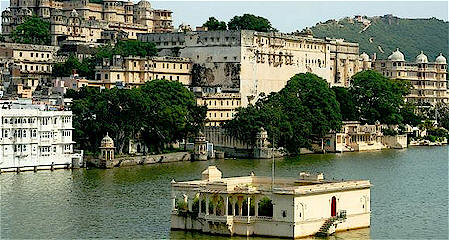
Udaipur
Udaipur is the jewel of Mewar kingdom ruled by the Sisodia dynasty for 1200
Years. The foundation of the city has an interesting legend associated with it.
According to it, Maharana Udai Singh, the founder, was hunting one day when he
met a holy man meditations on a hill overlooking the Lake Pichhola. The hermit
blessed the Maharana and advised him to build a palace at this favorable located
spot with a fertile valley watered by the stream, a lake, an agreeable altitude
and an amphitheater of low mountains. Maharana followed the advise of the hermit
and founded the city in 1559 A.D.
Udaipur Tourist Palace
City Palace
City Palace complex is actually a conglomeration of buildings added by various
Maharanis, the palace manages to retain a surprising uniformity of design ..
Saheliyon Ki Bari
Saheliyon ki badi, situated in the north of the city, is well maintained, with
fountains and kiosks, a delightful lotus pool ..
The Suraj Gokhada
The balcony of the sun, is where the Suryavanshi Maharanas of Mewar presented
themselves to the people in time of trouble to ..
Pratap Memorial
Atop Moti Magri (Pearl Hill), overlooking Fateh Sagar, is a statue of the Rajput
hero Maharana Pratap, who frequently defied Mughals .
Gulab Bagh
A spectacular rose Garden laid out by Maharana Sajjan Singh, is situated near
the palace on east side of Lake Pichhola. A library in the .
Sajjan Garh
Sajjan Garh, a former monsoon palace 1100 ft. high above the surrounding and
3100 ft. from sea level, was built by Maharana Sajjan Singh ...
Fateh Sagar
Surrounded by a number of hills, Fateh Sagar was originally built in 1678 by
Maharana Jai singh, but it was reconstructed by Maharana ..
Pichola Lake
Beautiful Lake Pichola was enlarged by Maharaja Udai Singh II after he founded
the city. He built a masonry ..
Jagdish Temple
Located only 150 m north of the entrance to the City Palace, this fine
Indo-Aryan Temple was built by Maharana Jagat Singh in 1651 ..
Bhartiya Lok Kala Museum
An interesting collection exhibited by this small museum and foundation for the
preservation and promotion of local folk arts .
Nagda
At Nagda there are some 10th century temples. The Jain temple of Adbudji is
essentially ruined, but its architecture is intresting.
Haldighati
Situated 40 Kms north of Udaipur, Haldighati, is where Maharana Pratap defied
the superior Mughal forces of Akbar in 1576..
Kumbhalgarh Fort : Kumbhalgarh, situated 65 km north of Udaipur hold a
heroic past having sheltered the heir of Mewar throne in times of Danger...
Jagat : Jagat is a small town, located 56 Kms southeast of Udaipur,
containing a small 10th century Ambika or Durga Mata Temple. There are some.
Jaisamand Lake : Jaisamand Lake was built by Maharaja Jai Singh in the
17th century and created by damming Gomti River; today it measures 14 km.
Ranakpur
The Ranakpur Complex hold an exceptional beauty, which is well worth seeing, and
makes for a convenient stop between Jodhpur and Udaipur.
Kankroli : Situated 65km away from Udaipur, Kankroli, also known as
Dwarkadhish, is an important Vaishnava temple and ranks very high among.
Rajsamand Lake : Rajsamand Lake was created by a dam constructed in 1660
by Maharana Jai Singh. There many ornamental arches and beautifully.
Ahar : About 2 Kms east of the ancient capital of Sisodia- Udaipur, Ahar
is famous for the impressive cluster of cenotaphs of the Maharanis of Mewa
Welcome Rajasthan Travel & Tourism Services
(Authorized by Tourism Dept. Govt. of Rajasthan)
C/O Umaid Mahal
,C-20 / B-2 Bihari Marg, Jai Singh Highway,
Opp. Lane of K.P. Automotives, Bani Park, Jaipur - 302016, Rajasthan (India)
Telephone : + 91-141-2205528 / 4914416 (09:00 A.M. To 06:00 P.M.)
+91-9829614748 (06:00 A.M. To 06:00 P.M.)
Fax : +91-141-2204470
For Car Rental Email: welcomerajasthan@yahoo.com
For Tour Package Email: info@welcomerajasthan.com
Emergency Contact Number : +91-9829614748




Other Information
City Distances Passport and Visa Information What to Pack Useful Phrases
Car Rental Services
Rajasthan Tour Packages
Tours from New Delhi
Rajasthan Historic tourMewari Tour with Agra
Classic Golden Triangle
Rajasthan Wildlife Safari
Rajasthan Real Adventure
Rajasthan Tour with Agra
Jaipur city tour w/ Pushkar
Rajasthan Desert tour
Classic Desert tour
Jaipur city tour
All tours starting from New Delhi
All tours starting from Jaisalmer